
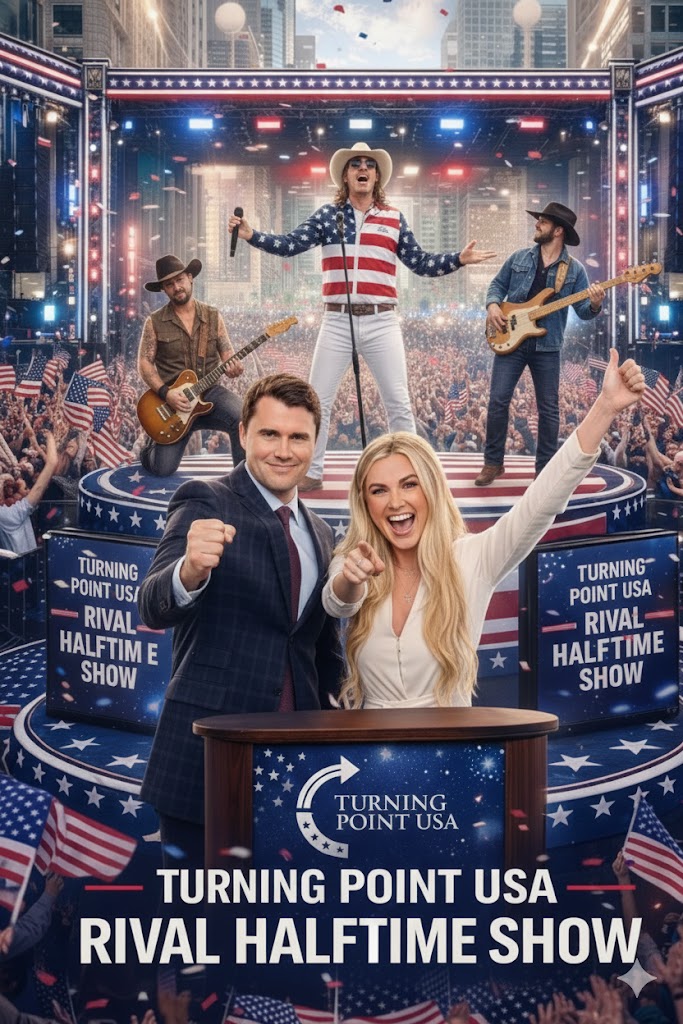
A Quiet Stage, A Loud Question: Why America Can't Look Away From This Unannounced Moment
Nothing about this moment looks designed for virality, yet it keeps spreading, because restraint feels radical in a culture trained to expect spectacle, scandal, and instant emotional payoff.
What is forming does not shout its intentions, and that silence is precisely why people are leaning in, trying to understand what is being said without ever being spelled out.
At the center are three familiar names whose careers were built long before algorithms dictated relevance or outrage became a marketing strategy disguised as authenticity.
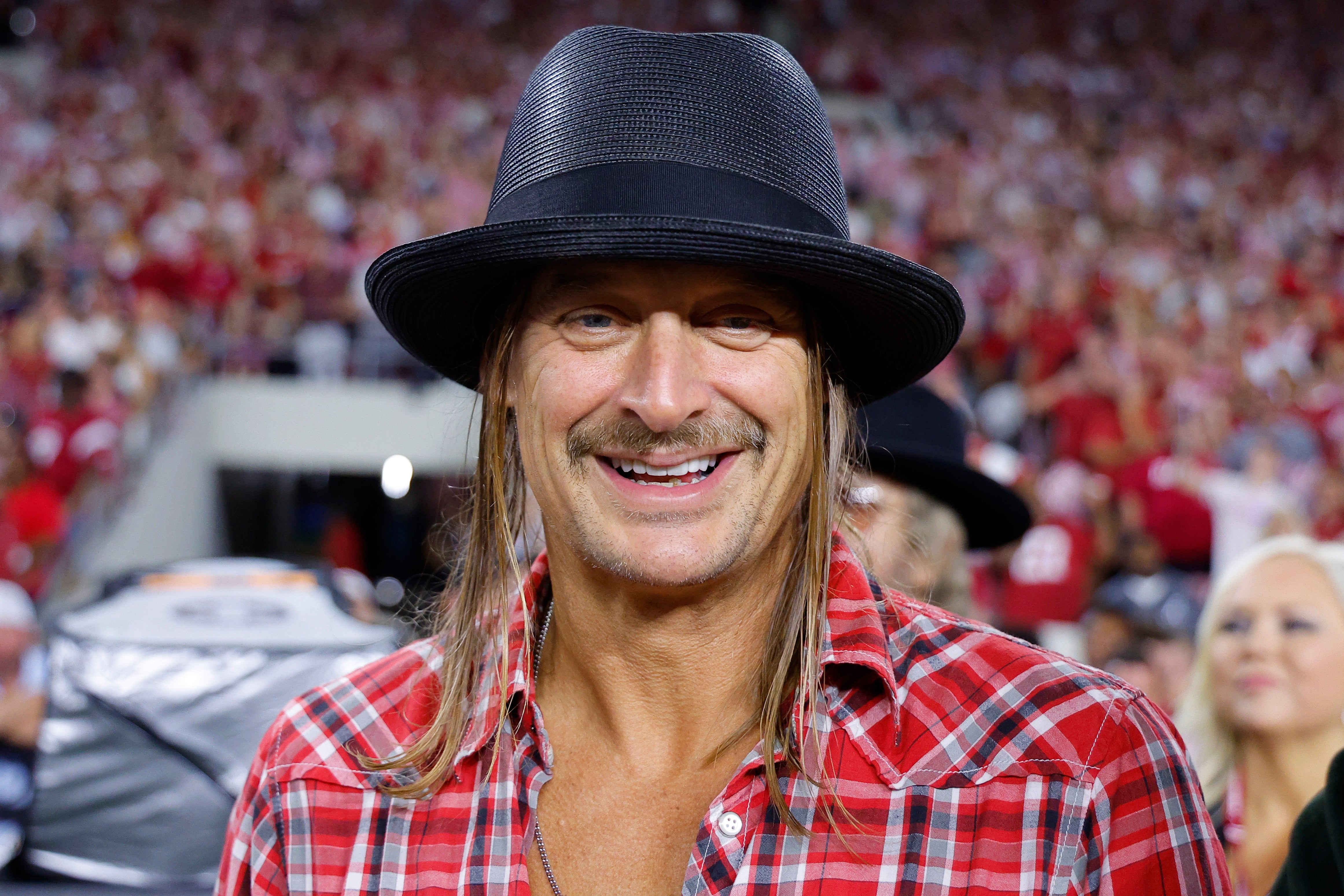
Kid Rock, Brantley Gilbert, and Lee Brice share a stage, but the setup resists every modern expectation of what a headline-making appearance should look like.
There are no fireworks, no viral slogans, no carefully engineered conflict meant to spark predictable online battles between opposing digital tribes.
Instead, there is space, and that space feels uncomfortable to many observers who have grown used to constant stimulation masquerading as cultural conversation.
Insiders describe the project not as a concert, but as a deliberate interruption, a moment designed to slow the national pulse rather than accelerate it.
In an era obsessed with momentum, choosing stillness can feel like a provocation, even when no explicit provocation is being offered.
The involvement of producer Erika Kirk, honoring the legacy of Charlie Kirk, adds another layer that invites interpretation without delivering clear instructions.
Some see this as a tribute, others see it as a signal, and many simply sense that something intentional is happening beneath the surface.
What makes this moment unusually potent is not what is said, but what is deliberately left unsaid, forcing audiences to project their own assumptions.
Supporters describe the atmosphere as calming, even healing, as though familiar voices are offering reassurance without promising easy answers.
For them, the lack of theatrical anger feels like a long-overdue acknowledgment that exhaustion has replaced excitement in the national mood.
Critics, however, argue that timing itself can be a statement, and that choosing this moment cannot be separated from the broader cultural climate.
They question whether restraint is truly neutral, or whether it subtly communicates alignment by refusing to engage openly with ongoing debates.
This tension between interpretation and intention is exactly what keeps the conversation alive, circulating quietly across platforms without a clear focal point.
People are not sharing clips because there are none designed to be clipped, and that absence becomes its own kind of intrigue.
In the background, the same question keeps surfacing in private messages, group chats, and comment sections that never quite reach consensus.
Why this message, and why now, when louder voices seem to dominate every public channel with relentless certainty and moral confidence.
The project feels like a pause button because it refuses to tell audiences how to feel, what to think, or who to blame.
That refusal can be liberating for some listeners, who miss art that trusts them to sit with ambiguity rather than consume conclusions.
For others, ambiguity feels like avoidance, especially when cultural lines feel sharply drawn and neutrality appears increasingly impossible.
The artists involved carry their own histories, controversies, and fan bases, which ensures that no gesture they make will ever be read as empty.
Every appearance becomes symbolic, whether intended or not, because familiarity amplifies meaning even in silence.
This is not nostalgia packaged for easy comfort, nor is it rebellion framed as disruption, but something harder to categorize.
It resembles a collective exhale, a moment asking whether constant engagement has crowded out reflection.
Social media thrives on clarity, conflict, and velocity, while this moment seems engineered to resist all three simultaneously.
That resistance alone becomes a story, especially when so many cultural products feel optimized for instant reaction.
People accustomed to outrage bait struggle to decide whether there is something to oppose, support, or simply observe.
The lack of a clear enemy frustrates those who rely on binary narratives to make sense of complex realities.
Meanwhile, fans who feel unseen by mainstream conversations read the quiet as validation rather than evasion.
They interpret the stripped-down approach as a sign that not everything meaningful needs to be framed as a fight.'
This split reaction reveals more about the audience than the event itself, exposing how conditioned responses have become.
Attention keeps building precisely because no one can agree on what kind of attention this deserves.
It is not trending because it demands to, but because curiosity fills the vacuum left by intention without explanation.
Some commentators attempt to decode symbolism, analyzing song choices, stage design, and production decisions for hidden messages.
Others argue that searching for coded meaning misses the point of intentional simplicity.
In a culture saturated with commentary, choosing to speak softly can sound louder than shouting.
The association with Charlie Kirk inevitably draws political interpretations, even as the format resists overt political messaging.
This creates a paradox where denial of spectacle becomes spectacle, and understatement becomes the loudest gesture in the room.
Whether viewed as healing or provocation, the moment exposes a hunger for something slower and less performative.
It suggests that many people are tired of being told what to think before they have time to feel anything at all.
That fatigue transcends traditional divisions, even as interpretations remain deeply divided.
The real signal may not be ideological, but emotional, pointing to widespread burnout beneath constant cultural warfare.
By refusing to declare itself, this project forces audiences to confront their own expectations of meaning and conflict.
That confrontation is uncomfortable, but discomfort often precedes honest reflection rather than immediate resolution.
What happens next may matter less than the pause itself, which has already disrupted the rhythm of predictable discourse.
In that disruption, people glimpse the possibility that not every moment must arrive screaming to matter.
Sometimes, the quietest stages carry the heaviest questions, and America seems unable to stop listening.
This moment was never designed to dominate feeds, yet it keeps circulating, because restraint feels shocking in a culture addicted to volume, speed, and outrage-driven relevance.
Three familiar country-rock voices share one stage, stripped of spectacle, refusing to perform conflict, and that refusal alone has become the headline.
Kid Rock, Brantley Gilbert, and Lee Brice are not selling rebellion or nostalgia, but offering a pause that feels unfamiliar and unsettling.
Produced by Erika Kirk in honor of Charlie Kirk, the event avoids being labeled a concert, choosing intention over entertainment.
Supporters describe it as healing, a reminder that reflection can exist without slogans or enemies clearly defined.
Critics argue the timing itself speaks loudly, suggesting silence can be political even when no politics are spoken aloud.
That tension is exactly why attention keeps building without a clear viral trigger or manufactured controversy.
People keep asking the same question quietly, sharing theories instead of clips, curiosity instead of certainty.'
Why this message, and why now, when culture rewards extremes and punishes nuance.
The lack of answers becomes the point, forcing audiences to confront their own expectations of meaning and conflict.
In a landscape designed for noise, this quiet moment cuts deeper than shouting ever could.