

The Vietkong faced American firepower. Helicopter assaults that shook the earth. Artillery barges that turned jungle into moonscape. Elite green berets trained for every scenario. Yet there was one unit they feared above all others. Not American. Australian. The Special Air Service Regiment.
The Vietkong called them Maung. The Phantoms of the Jungle. Vietnam 1965. Australia commits combat forces to support American operations. But the Australians bring something different to this war. The Special Air Service Regiment formed just 7 years earlier in 1957 arrives with a philosophy forged in Malaya and Borneo.
Small teams, deep penetration, silent kills. While Americans build fire support bases and clear landing zones, the SAS vanishes into the green Fuakui province. Dense jungle where visibility drops to meters. Terrain that swallows battalions. Here, conventional warfare means nothing. The Vietkong own this jungle. They fought here for decades.
They know every trail, every ambush point, every hiding place. Or so they believe. The SAS don’t fight like other units. Four to six men. No radio chatter. No support nearby. They move like the jungle itself. Patient. Silent. Lethal. They don’t hold territory. They hunt. American special forces operate differently.
Green berets train indigenous troops. Navy Seals hit targets with speed and firepower. LRPS patrol in squad strength or larger. They move with purpose, with backup, with the might of American logistics behind them. The SAS walk in quietly, sometimes for weeks at a time. 1966, a Vietkong intelligence report captured by Australian forces in Benwa province.
Exercise extreme caution in sectors patrolled by Australian reconnaissance elements. Their movements are undetectable. Their ambushes are without warning. Unlike American forces, they do not reveal positions with radio traffic or movement noise. When Australians are near, our casualties increase significantly while we achieve no confirmed kills against them.
The report continues, “Recommend avoiding contact with these units. If contact is unavoidable, withdraw immediately. This is not fear of technology, not fear of numbers. This is fear of ghosts.” By late 1966, Vietkong units begin reporting something unusual. Patrols disappear without firefights. Supply caches are discovered and destroyed without warning.
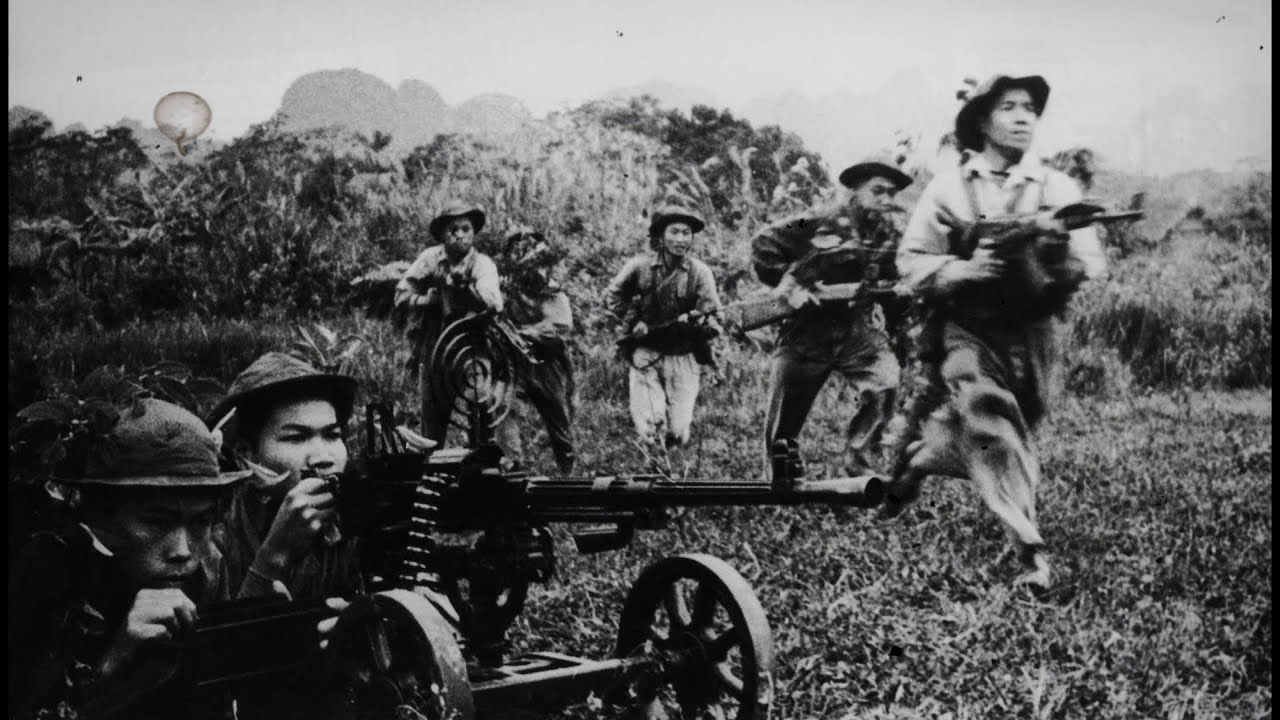
Trails are monitored, but the observers are never seen. The Vietkong know the Australians are here, but they cannot see them. February 1967. Four men from three squadron SASR prepare for insertion. Their mission, locate and monitor VC base camp suspected to be operating in the hat ditch area north of Newat. No helicopter insertion.
They walk 30 km through enemy territory. Standard SAS patrol formation. Four men 3 to 5 m spacing. The point man reads the jungle. Broken branches, disturbed earth, bootprints in mud. Every sense engaged, every step deliberate. They move for 6 hours, cover 9 km. Most infantry units would have covered the distance in 2 hours.
The SAS takes six because they see everything. Trail markers, recent movement, bootprints, perhaps 8 hours old. They don’t follow the trail, they shadow it. Day three. They establish an observation post 300 meters from the suspected VC camp. Two men watch. Two men rest. 4-hour rotations. No talking. Hand signals only. No fires. No smoking.
Cold rations. They watch for 48 hours. They count 43 VC fighters. Map defensive positions. Note supply caches. Identify the command structure by who gives orders. At night, brief radio transmission whispered encoded. 4 minutes total air time in 3 days. The artillery strikes at dawn. 8 minutes of precision fire.
31 confirmed VC casualties. The SAS are already gone. Moving to the next objective. The Vietkong search the tree line for 2 days. They find nothing. No positions, no shell casings, no footprints, just ghosts. April 1967, Route 328, east of Shu Yen Mach. Intelligence indicates regular VC supply movements along this trail.
Weapons from Cambodia moving south. Fiveman patrol from two squadron establishes ambush position. Classic linear ambush. Claymore mines covering the kill zone. Interlocking fields of fire. Every man knows his sector. They wait 18 hours. Motionless. Ants crawl over them. Mosquitoes feed. They don’t move. Dusk of day two. 12 VC fighters carrying AK47 seconds.
RPG rounds. Mortar shells. The SAS. Count them into the kill zone. Wait for the exact moment. Maximum effect. The ambush commander counts silently. 3 2 1. The ambush lasts 4 seconds. 4 seconds of concentrated devastating violence. 12 VC casualties captured. 14 AK 47 seconds. Six RPG rounds, classified documents showing supply routes. The SAS withdraw.
6 minutes from ambush to complete extraction from the area. VC reinforcements arrive 24 minutes later. The Australians are gone. A captured VC document from May 1967 describes this incident. The Australian ghosts attacked our supply column on Route 328. We lost 12 comrades and critical supplies.
No Australian casualties observed. No evidence of their approach or withdrawal. They appear, kill, and vanish. Our cadre are afraid to move at night. By mid 1967, the Vietkong’s 274th regiment issues internal directives specifically about Australian forces. Document after document describes the same pattern.
Australians appear without warning. Kill with precision. Disappear completely. Nuin Vanthan, former VC platoon commander, interviewed in 1995. The Americans. We knew how they fought. Helicopters, artillery, many soldiers. Loud. We could hear them coming. We could prepare or hide or run. The Australians different. They moved like we moved.
Patient, quiet. We would find our comrades dead in the jungle and never knew the Australians were there. It was like fighting shadows. The psychological impact spreads through VC ranks. Patrols become tentative. Soldiers hesitate on trails. Supply movements slow. A captured report from August 1967 issued by VC Provincial Command.
All units must recognize that Australian reconnaissance forces represent the highest threat level. Their capability exceeds American special forces units. Unlike American forces who rely on technology and numbers, Australians operate with minimal support and maximum stealth. They have adopted our tactics and improved upon them.
We cannot detect them. We cannot ambush them. We can only avoid them. The VC understand the difference. Americans bring civilization to the jungle. Lights, noise, routine, predictability. The SAS become part of the jungle. Invisible, unpredictable, everywhere and nowhere. For an insurgent force that owns the terrain, that prides itself on patience and stealth.
Meeting an enemy that does it better is psychologically devastating. The hunters become the hunted. August 1967. Operation Porty. The long high hills. Heavily fortified VC stronghold. Tunnel complexes, multiple defensive positions, battalion strength force. Australian command needs current intelligence.
Troop numbers, defensive positions, entry points. Six-man patrol from three squadron receives the assignment. Initial insertion by helicopter. 5 km from target area. 30 seconds on ground. Helicopter gone. The patrol disappears into the green. Two days to reach observation positions. The terrain is brutal. Wait a while.
Vines that rip through clothing. Slopes so steep they climb on hands and knees. They move 50 m per hour through the worst sections. Day three. Observation post. Established on high ground 400 m from main VC camp. Perfect visibility. Elevated position. Natural concealment. They observe for 72 hours. Count 230 VC fighters. Map 17 defensive bunkers.
Identify three tunnel entrances. Chart patrol routes and timing. Each night. Brief radio reports. Encoded. 5 minutes maximum. Day four. Mission complete. Time to extract. They withdraw the way they came. Slowly, carefully. VC patrols pass within 100 m. Never see them. Extraction successful. Zero contact. Zero casualties.
The intelligence proves decisive. Australian forces launch assault on Longhai two weeks later using exact routes and weak points identified by the SAS patrol. Capture documents reveal something remarkable. A VC afteraction report dated the same week as the SAS observation. Security patrols detected no enemy reconnaissance in our sector.
Defensive positions remain secure and uncompromised. The Vietkong had no idea they were being watched. For 3 days, six Australians sat 400 m away, documenting everything. Invisible. What made the SAS different wasn’t equipment, wasn’t technology, it was philosophy. American special forces operated within a framework of abundant resources. Air support on call.
Artillery within radio range. Extraction helicopters ready. Larger team sizes for mutual support. The SAS stripped everything away. Smallest possible teams, minimal equipment, no expected support. A typical SAS patrol carried 7 days of rations, 300 rounds of ammunition, one radio, medical supplies, water purification, nothing else.
American patrols carried twice the equipment, twice the firepower, operated with twice the personnel. In Triple Canopy Jungle, numbers become a liability. More people means more noise, more movement, more thermal signatures, more chances for compromise. Four men properly trained move like smoke. SAS selection emphasized individual skill over team firepower.
Navigation without GPS. Every man could lead the patrol. Every man could call artillery. Every man could treat casualties. American special forces specialized. Weapons specialist, communications specialist, medic. The SAS cross-trained for redundancy. Any man could do any job. This created operational flexibility. Lose your radio operator? Everyone knows the radio.
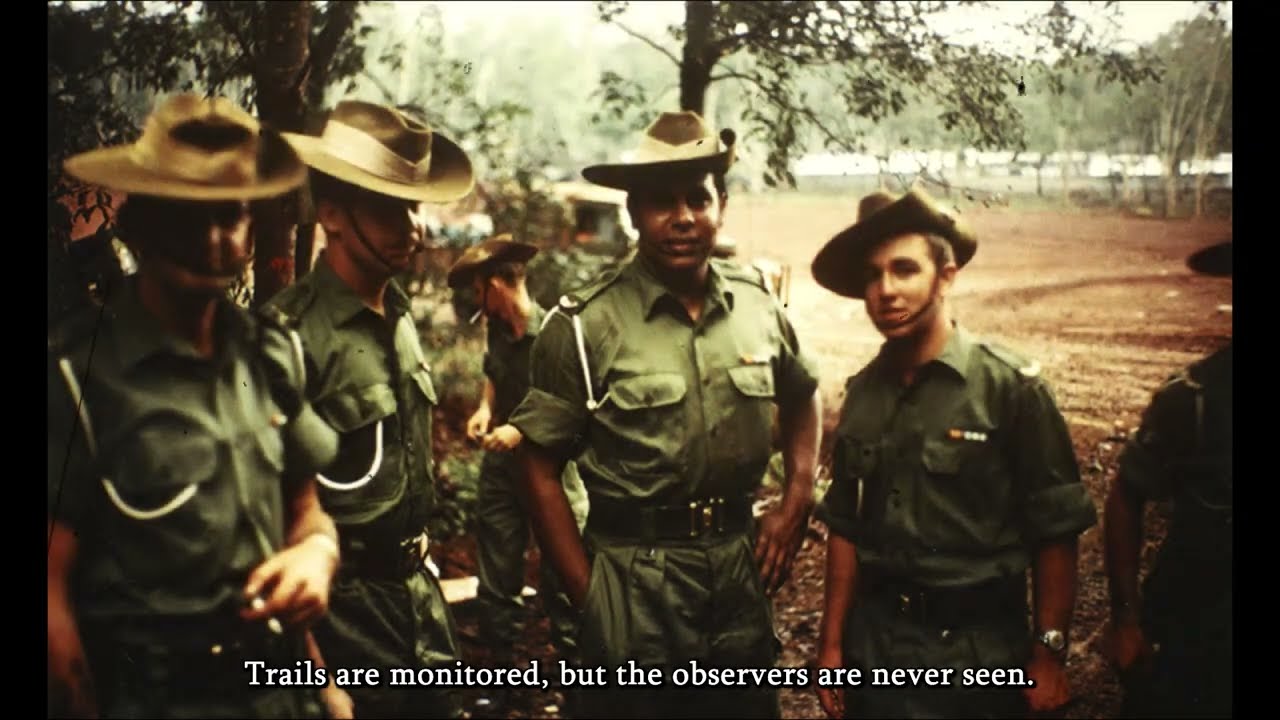
Lose your navigator, everyone can navigate. Lose your patrol commander. Second in command takes over seamlessly. The VC understood ambush warfare. They invented modern guerilla tactics. They’d fought the French, the Japanese, the French again. Decades of experience. The SAS studied those same tactics, then mastered them. Many SAS officers had served in Malaya and Borneo, fought communist insurgents in similar terrain.
They brought that knowledge to Vietnam. They understood that in this environment, patience beats firepower, stealth beats speed, intelligence beats aggression. American doctrine emphasized decisive action. Find the enemy, fix them, destroy them. SAS doctrine emphasized information. Find the enemy, understand them, report them, and only strike when advantage is absolute.
For the Vietkong, accustomed to fighting an enemy they could see and hear and predict. Fighting an enemy they couldn’t detect was psychologically shattering. In the decades after the war, former Vietkong soldiers were interviewed about their experiences. Levan Fong, former VC intelligence officer, interviewed in 1998. We studied every American unit.
We knew their tactics, their weapons, their weaknesses. We could predict their movements. The Australians, we could not predict. They thought like us, but fought better than us. They did not announce themselves with helicopters and artillery. They simply appeared and people died and they vanished. Our commanders told us, “If you encounter Americans, you can fight or withdraw as the situation demands.
If you encounter Australians, withdraw immediately. Do not engage.” Tran men, former VC platoon leader, speaking in 2003. I fought for 6 years in Fuaktui province. I saw Americans many times, fought them, survived, killed some, lost comrades. I saw Australians only twice. Both times I survived only because I ran immediately.
The second time, three of my men did not run fast enough. They died before they could return fire. I have respect for the Australians. They fought with honor, but they fought to win. They were soldiers in the truest sense. Captured VC documents reveal standing orders about Australian forces. Provincial command directive October 1967.
Australian forces in Fuokui province represent primary threat to operations. Their reconnaissance capability is unmatched. Their ambush doctrine is highly effective. Casualties inflicted by Australian forces exceed those from American forces despite smaller Australian numbers. All unit commanders must implement maximum security when Australians are believed to be in operational area.
Increase sentry rotations. Avoid pattern setting. Assume all movements are observed. The statistics support the reputation. Between 1966 and 1971, the SAS conducted over 1,200 patrols in Fuok 2 province. Enemy casualties, estimated 492 killed, 106 captured. SAS casualties, three killed in action. That’s a kill ratio of 164 to1.
For context, American forces in Vietnam achieved roughly 2:1. Elite American units like Navy Seals and Green Berets achieved roughly 10 to one, 164 to1. But numbers alone don’t explain the fear. The psychological impact of an invisible enemy exceeded the tactical impact. The Vietkong were used to being the hunters. They set the ambushes.
They chose when to fight. They controlled the jungle. The SAS reversed that completely. Suddenly, the VC were prey, constantly watched, never safe, never able to predict when death might come. A Vietnamese phrase emerged among VC units in Futoui. Ma Rang, the phantoms of the jungle. not human. Supernatural.
That’s how the SAS were perceived. Behind the legend were men. Former SAS patrol commander speaking in 2012. People think we were superhuman. We weren’t. We were scared most of the time. You spend 72 hours behind enemy lines. Four of you surrounded by hundreds of them. You’re terrified. But we trained for that fear. We channeled it. Fear makes you alert.
Makes you careful. Keeps you alive. The key was patience. We could stay still longer than anyone else. We could wait when every instinct screamed to move. That’s what made us effective. These men operated at the edge of human endurance. Leeches covering their bodies. tropical ulcers eating into their skin, dehydration, exhaustion, constant vigilance.
One veteran described lying in an ambush position for 14 hours while driver ants swarmed over him. He didn’t move, couldn’t move. The VC were 30 m away. The ants bit him 112 times, he counted. Another patrol was compromised when they accidentally triggered a booby trap. No casualties, but the noise alerted nearby VC.
Four SAS soldiers, estimated 40 VC pursuing. They ran for 6 km toward pre-planned extraction point. They made it all four. Wounded, exhausted, but alive. The helicopter pilot reported seeing no pursuers at extraction site. The VC arrived 30 seconds after extraction. 30 seconds. These weren’t action heroes.
They were professionals who understood that survival required perfection. One mistake meant death. Not just your death, your patrol’s death. So they checked their equipment obsessively, trained until actions became instinct, learned to function on two hours of sleep in three days, and they trusted each other absolutely.
Four men alone in enemy territory have no choice but trust. That bond forged in the jungle lasted lifetimes. By 1971, Australian forces Withdraw from Vietnam, the war continues for four more years, but the SAS are gone. Their legacy remains. Special forces units worldwide study SAS operations in Vietnam. The tactics, the philosophy, the execution, small team reconnaissance, maximum stealth, intelligence over firepower.
These principles refined by the SAS in Vietnamese jungle became foundational doctrine. The men who served rarely speak of their experiences. When they do, they speak without boasting. They describe doing their job. Following their training, they remember the three who didn’t come home. In Vietnam, the jungle has reclaimed the trails.
The camps are gone. The war is memory, but the respect remains. The Australians were our enemy. We fought them, they fought us. This is war, but they fought with skill and with honor. They did not waste lives, ours, or theirs. They achieved objectives with minimum casualties. This is the mark of true soldiers. We feared them, yes, but we also respected them.
If you must have enemies, let them be worthy enemies. The Australians were worthy in the shadows of the Vietnamese jungle. They became something beyond soldiers. They became ghosts the enemy could neither see nor escape. They became the Australians the Vietkong feared most. Ma Rang, the phantoms of the jungle.