
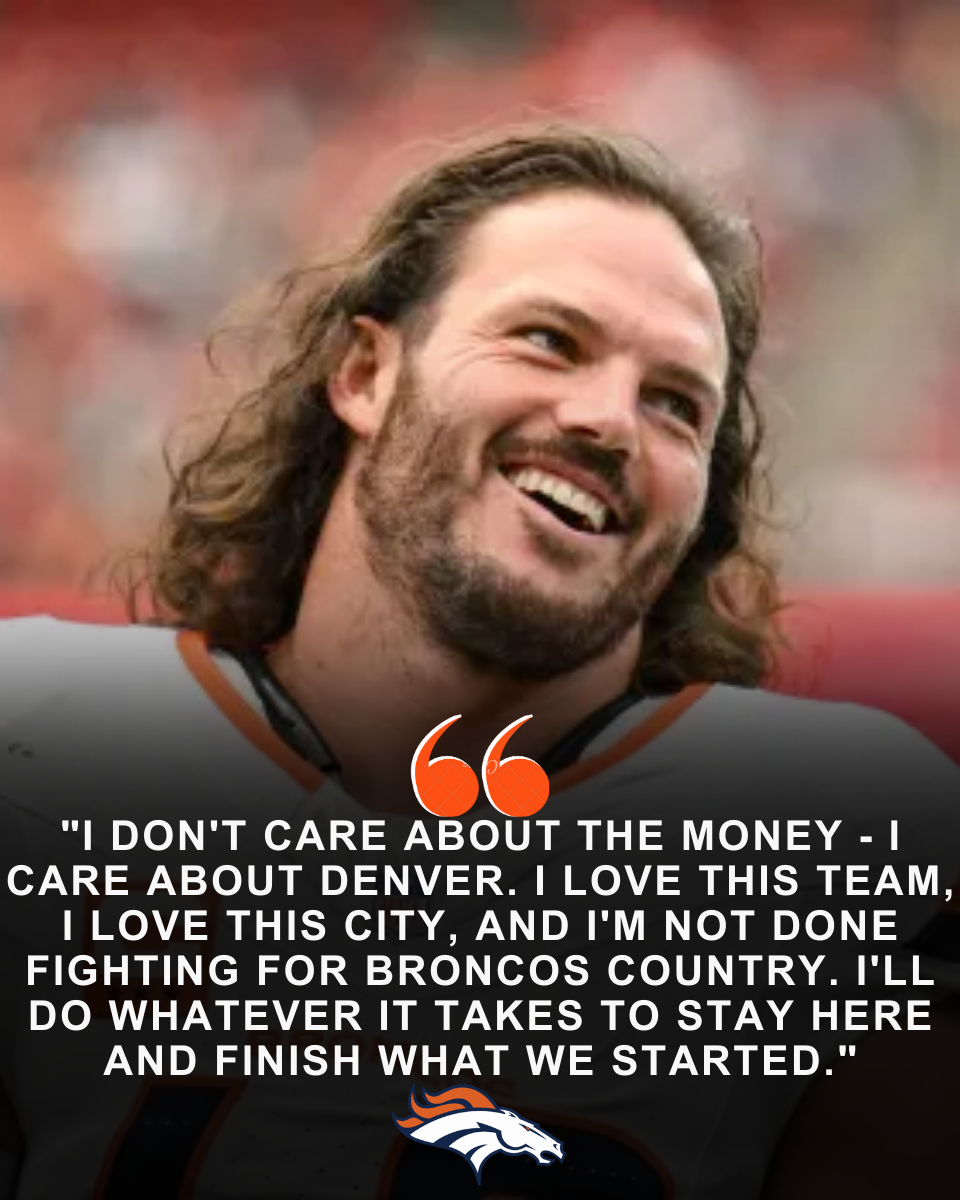
Broncos Country is imagined to be absolutely stunned tonight as reports claim linebacker Alex Singleton is agreeing to a minimum-wage deal to stay with the Denver Broncos — a move that instantly feels bigger than football, bigger than money, and bigger than the typical business reality of the NFL.
In this fictional breaking moment, the shock isn't that a player took less.
The shock is who took less.
Because Alex Singleton isn't a flashy superstar chasing endorsements.
He's the heartbeat-type.
The grind-type.
The war-type.
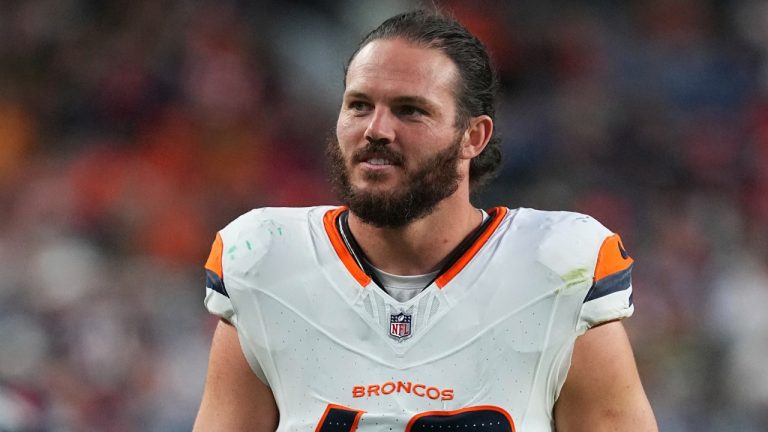
The kind of linebacker who doesn't just play defense — he plays like he's protecting his family.
So when a player like that is rumored to be taking the league minimum just to stay in Denver, fans don't interpret it as a contract decision.
They interpret it as a message.
A statement.
A vow.
According to this imagined storyline, Singleton's deal is being described internally as "win-win," but not in the way fans usually hear that phrase.
Usually, "win-win" means the team gets cap space and the player gets security.
But here, the "win-win" is emotional.
The Broncos keep a leader.
And Singleton keeps the place he believes he belongs.
In a league where loyalty is constantly tested, this kind of decision feels almost unreal.
Because NFL careers are short.
Injuries are brutal.
Teams cut players without blinking.
Fans move on fast.

Yet in this fictional scenario, Alex Singleton is choosing Denver anyway — even at minimum wage.
And that is why Broncos Country is imagined to be reacting like they just witnessed something sacred.
Supporters might argue that this is exactly why Singleton has become so beloved in Denver.
He doesn't play for the spotlight.
He doesn't play for the brand.
He doesn't play for the applause.
He plays like he's been given one mission:
Make the opponent regret every snap.
The fictional report suggests Singleton's decision wasn't just made in a meeting room.
It was made in his heart.
Because his commitment to Denver, in this imagined narrative, is described as personal.
He loves the city.
He loves the locker room.
He loves the fans.
He loves the fight.
And above all, he loves what the Broncos are trying to become.
Fans across Denver are portrayed as emotional because this move feels like the opposite of modern sports.

Modern sports is about leverage.
Modern sports is about maximizing value.
Modern sports is about getting paid what you're worth.
But this fictional story paints Singleton as a man who looked at the Broncos' future and decided:
"I want to be part of it more than I want the money."
That is a dangerous kind of leadership.
Because it makes everyone else look in the mirror.
It forces teammates to ask:
If Singleton can sacrifice, why can't we?
It forces the front office to ask:
If Singleton believes this hard, how do we not build around that belief?
And it forces fans to realize something they rarely get to witness in today's NFL:
A player choosing the team, not the paycheck.
In this imagined scenario, insiders claim Singleton delivered an emotional message to the organization after agreeing to the deal.
Not a long speech.
Not a dramatic announcement.
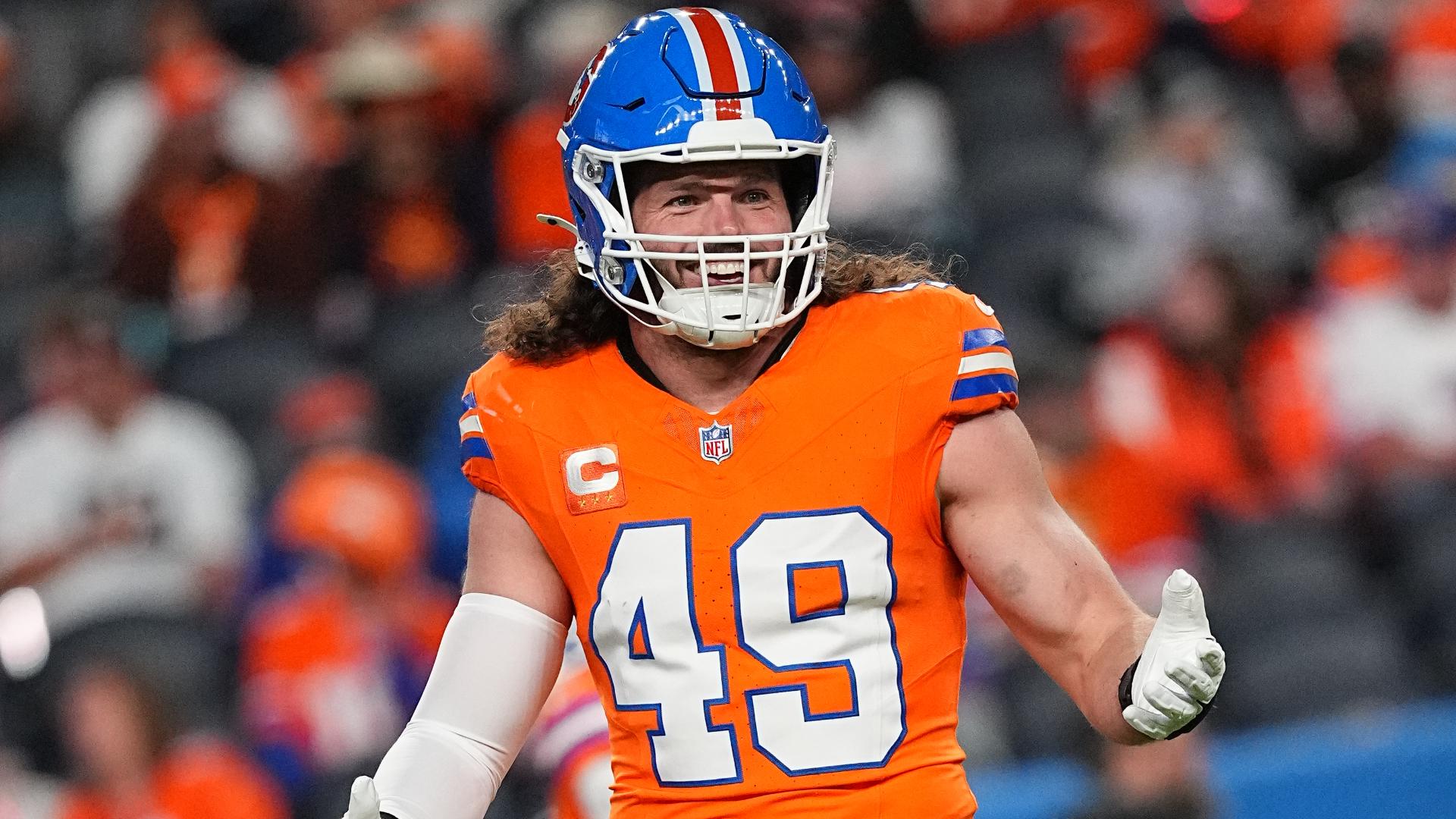
Just a simple, powerful statement that spread through the building like electricity.
He reportedly told the Broncos he wants to stay in Denver to fight, contribute, and chase the team's greatest goals.
Fans interpret that as a vow.
Because Alex Singleton isn't the kind of player who says things for cameras.
He says things because he means them.
The fictional narrative emphasizes that this move is being viewed as a cultural victory for Denver.
Because the Broncos have spent years searching for identity.
They've had roster turnover.
Quarterback instability.
Coaching changes.
A carousel of hope and disappointment.
But now, in this imagined world, the Broncos are finally building something real again — and Singleton is refusing to leave before it's finished.
Supporters might argue that minimum wage doesn't mean minimum value.
Because Singleton's value isn't measured only in tackles.
It's measured in energy.
It's measured in leadership.
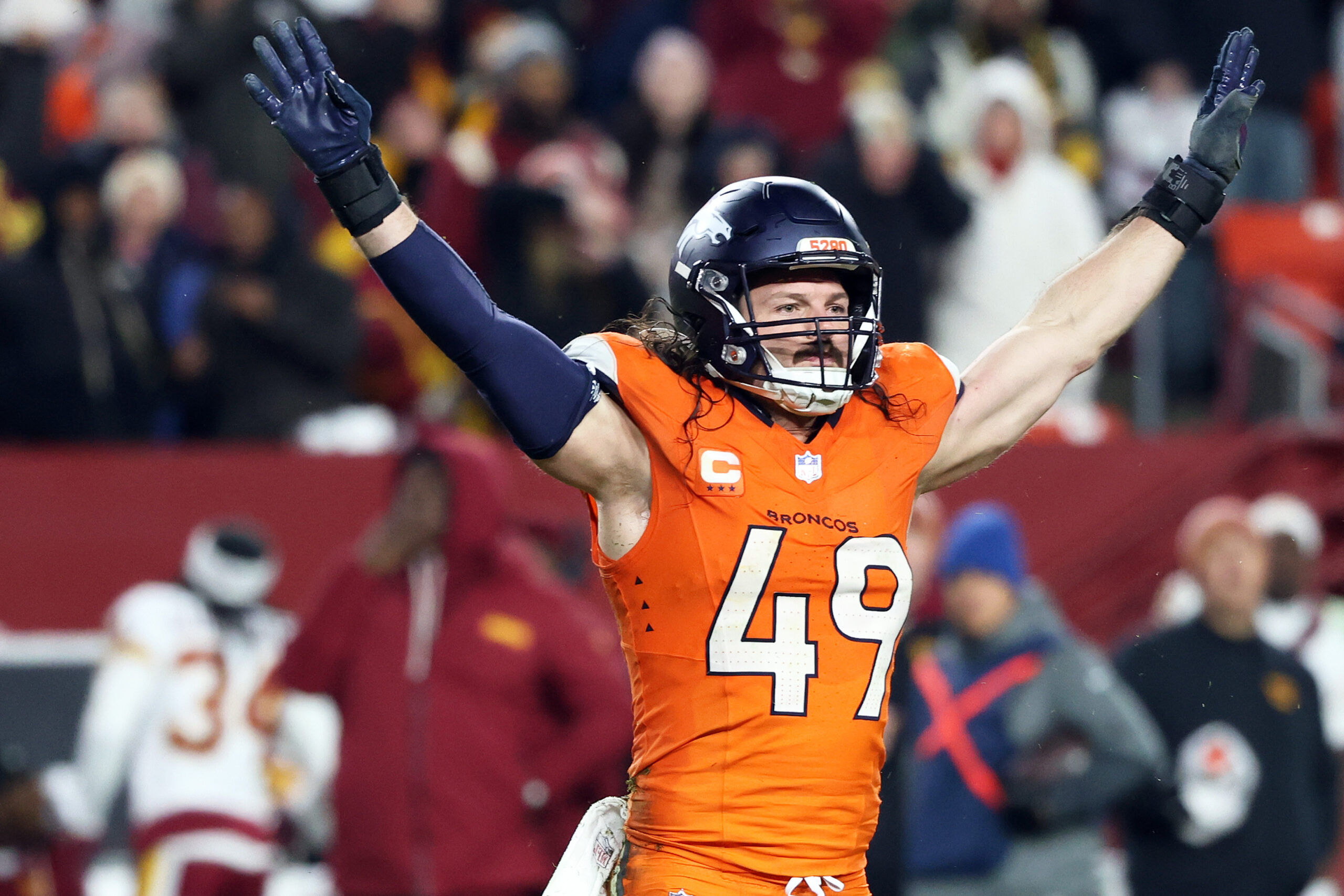
It's measured in how teammates play harder when he's on the field.
And it's measured in the way fans feel when they watch him.
Because Broncos Country doesn't just see Singleton as a linebacker.
They see him as one of them.
A working-class warrior in pads.
The fictional report suggests the Broncos front office is thrilled because this deal creates financial flexibility, allowing Denver to keep other key pieces or add new talent in free agency.
But the emotional truth, in this imagined narrative, is that the cap savings are not the biggest benefit.
The biggest benefit is the message.
A veteran leader just told the league:
"I believe in Denver."
And belief is contagious.
In this fictional scenario, Broncos players are portrayed as reacting with deep respect.
Some are stunned.
Some are inspired.
Some are emotional.
Because NFL players understand the risk of taking less money.
They understand injuries can end everything.
So when a veteran willingly takes the minimum, it isn't seen as weakness.

It's seen as courage.
Supporters might argue that this move instantly elevates Singleton's legacy in Denver.
Not because he became the richest.
But because he became the most loyal.
Fans begin calling him the definition of Broncos culture.
They compare him to the old-school Denver defenders — the ones who played with violence, pride, and love for the city.
And in this imagined storyline, Singleton's name starts being mentioned in the same breath as the Broncos' most respected warriors.
The fictional narrative also suggests that this move could influence how other veterans approach Denver.
Because free agents don't just follow money.
They follow culture.
And when a respected linebacker takes the minimum to stay, it signals that something special is brewing inside that locker room.
Supporters might argue that this could be the beginning of a new Denver identity:
A team built on sacrifice.
A team built on unity.
A team built on toughness.
And that is exactly the kind of identity Sean Payton would want.
In this imagined world, Payton is portrayed as loving the move because it reflects everything he values:
Commitment.
Accountability.
Winning mentality.
The story closes with one final emotional punch.
Alex Singleton, in this fictional narrative, isn't staying in Denver because it's comfortable.
He's staying because he believes the Broncos are about to rise.
And he wants to be there when it happens.
He wants to fight for it.
He wants to earn it.
And he wants Broncos Country to know one simple truth:
His loyalty isn't negotiable.
In this imagined breaking moment, the Broncos don't just get a linebacker back.
They get a symbol.
And symbols, in football, can change everything.