

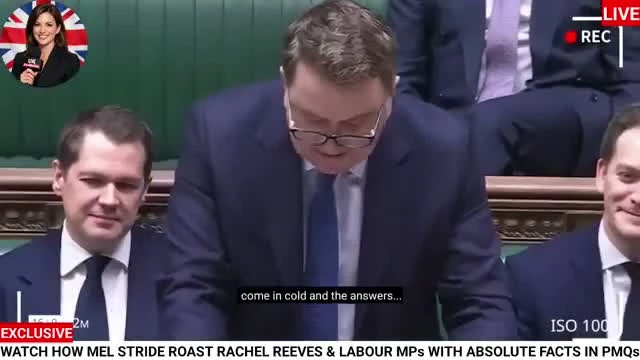
Chancellor Rachel Reeves faced a pointed series of questions from Shadow Chancellor Mel Stride during a parliamentary session, with Stride delivering a critique of the government’s economic record that drew a visible reaction from the Chancellor. The exchange occurred in the House of Commons as Stride pressed Reeves on the state of the public finances, accusing her of breaking promises and mismanaging the economy.
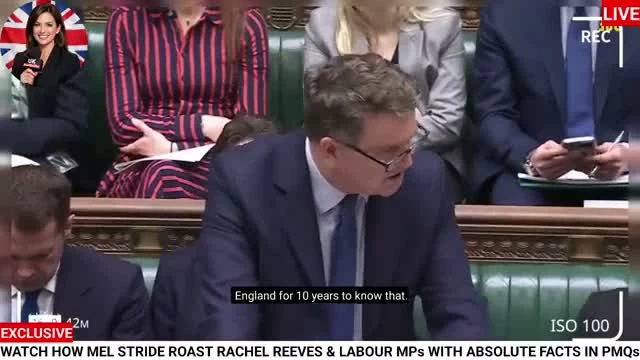
Stride began his remarks by recalling the Chancellor’s earlier commitment to bring stability to the public finances, a promise he said had instead resulted in what he termed an “emergency budget.” He cited figures from the Office for Budget Responsibility, stating that growth had been halved in the current year and that inflation, which he said stood at 2% at the time of the last general election under the previous Conservative government, was now forecast to run at twice that level. He also noted that the OBR had predicted rising unemployment across the forecast period.
The Shadow Chancellor argued that the economic challenges were a direct consequence of decisions made by the Chancellor and the Labour Party. He referenced the OBR’s findings on debt interest, which he said was running at twice the defense budget, and accused Reeves of creating a “black hole” in the public finances. Stride stated that the Chancellor had borrowed, spent, and taxed in a manner reminiscent of the 1970s, and he criticized her for what he described as a failure to control spending and borrowing.
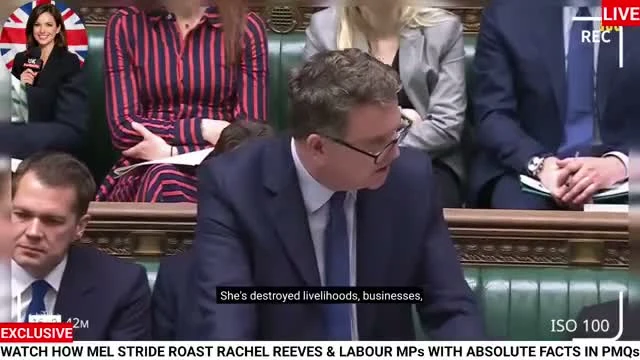
Stride then focused on the impact of tax policies on businesses and employment. He asserted that the Chancellor had taxed jobs and wealth creation, leading to job losses at major companies including Morrison’s, Tesco, and Sainsbury’s. He cited the Chartered Institute of Personnel and Development, saying that a third of affected businesses would shed labor, and referenced the Federation of Small Business, stating that business confidence outside of the pandemic was at its lowest level on record. He also mentioned the impact on charities, GPs, pharmacists, and hospices.
The Shadow Chancellor challenged the Chancellor on her fiscal rules, noting that all fiscal headroom had disappeared and that the government had gone “underwater to the tune of 4.1 billion pounds.” He described the breaking of fiscal rules within six months as a “public humiliation.” Stride then turned to defense spending, welcoming the government’s commitment to reach 2.5% of GDP by 2027 but pressing for a faster increase to 3% within this Parliament. He also asked whether the Chancellor would scrap the Chagos deal to redirect funds to the armed forces.
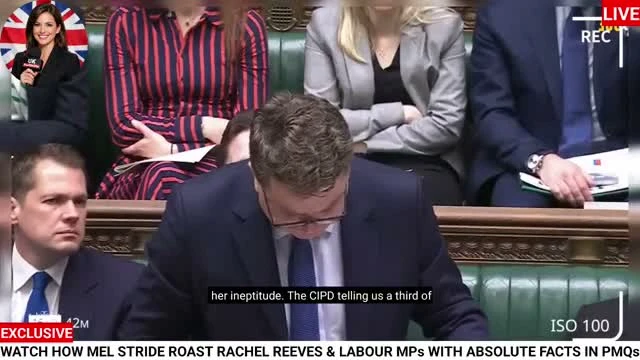
Stride criticized the government’s approach to welfare reform, drawing on his experience as a former Secretary of State for Work and Pensions. He claimed that the previous Conservative government had achieved savings of 5 billion pounds and reduced the number of people going onto long-term sickness and disability benefits by 450,000. He accused the Labour Party of rushing changes without a clear plan, noting that the OBR had described the recent welfare announcements as “shambolic.” He questioned whether an impact assessment had been withheld due to the OBR not signing off on the numbers or a lack of time to produce one.
The Shadow Chancellor concluded by listing a series of promises he said the Chancellor had broken, including commitments on borrowing, fiscal rules, national insurance, winter fuel payments, taxes on farmers, and the number of fiscal events per year. He argued that the country was “poorer and weaker” as a result of her choices. Throughout the exchange, Stride maintained a structured and relentless tone, delivering his points as a sustained interrogation rather than a simple series of questions.
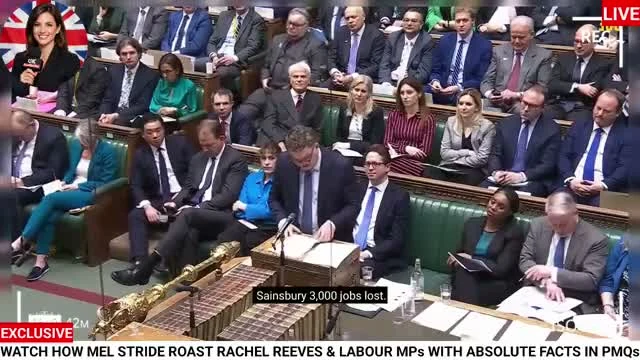
The chamber was described as buzzing during the exchange, with MPs leaning forward as Stride spoke. The Speaker of the House intervened at one point to remind members about language, but Stride continued with his line of questioning. The Chancellor, Rachel Reeves, appeared visibly uncomfortable as the Shadow Chancellor laid out his critique, with observers noting her reaction as she sat in her seat during the proceedings.
The exchange highlighted the ongoing political tension over the government’s economic management, with Stride framing the narrative around broken promises and declining economic indicators. The Chancellor has not yet publicly responded to the specific points raised by Stride regarding the OBR forecasts and the impact of her policies on businesses and employment. The full implications of the economic data presented in the session remain a subject of political debate.